

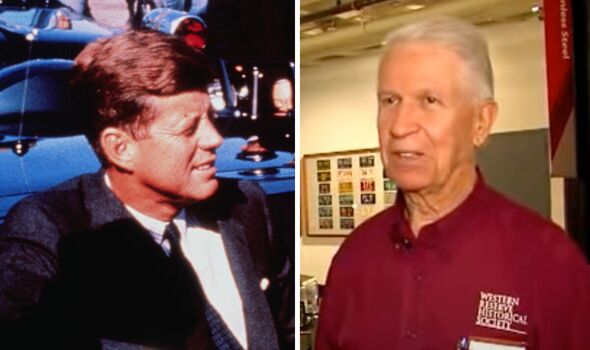
A recently revealed claim from a former Secret Service agent is stirring the pot of long-standing conspiracy theories surrounding the assassination of John F. Kennedy. Paul Landis, 88, who was present in Dallas on the day of the fateful shooting, has come forward with a new account that could undermine the ‘magic bullet’ theory and raises questions about the possibility of a second shooter in the 1963 attack.
Landis, who was assigned to protect First Lady Jacqueline Kennedy at the time, made it known this past Saturday that he had retrieved a nearly pristine bullet from the back seat of the limousine shortly after the shooting. Supposedly, this bullet was then placed on President Kennedy’s hospital stretcher. Yet for decades the bullet, which would have been the first piece of evidence logged in the murder investigation, has been said to have been found on Governor John Connally’s stretcher.
The ‘magic bullet’ theory has long been the basis for the report of the Warren Commission which found Lee Harvey Oswald to have acted alone in the killing of the president. Under this theory, a single bullet had passed through Kennedy’s neck from the rear then entered Connally’s right shoulder, struck his rib, exited under his right nipple, passed through his right wrist, and hit his left thigh.
Landis’ story would suggest that this bullet wasn’t responsible for the injuries to Connally, discrediting the single-bullet theory. This would in turn bolster the claim that Oswald acted alone, and not as part of an organized team.
James Robenalt, a historian and attorney who has been working with Landis on a book due to release this October, believes the new account gives the possibility of multiple shooters more credence. He also noted that the time gap between Kennedy and Connally’s reactions, as appears in the infamous Zapruder film, has led to speculation that one shooter couldn’t have been responsible for both injuries.
The possibilities to where the throat wound came from have also been raised, as autopsy X-rays have indicated evidence of metallic shards near Kennedy’s upper spine. Robenalt pointed out that this could suggest the wound was an entry point, as ER doctors initially suspected. An entry of a bullet from the front, however, could not have been fired by Oswald from the Book Depository.
Taking the speculation further, Robenalt considered the ‘grassy knoll’ area to the right of the motorcade route and the ‘Triple Underpass’ in front of the motorcade as possible sniper positions.
Landis said he has grappled with mental trauma from the day of the shooting, being ‘haunted’ by the glimpse of Kennedy’s head exploding. This eventually led him to try and challenge the established belief of Oswald’s lone gunman status through the writing of his book. He claims he is now uncertain about his memories, but his story has certainly added fuel to the raging debate about Kennedy’s assassination.
For now the only thing that is certain is the enormity of the mysteries which still remain over that fateful day in 1963. In a nation so preoccupied with the speculation concerning the assassination of a former president, answers are still far and few between.

