

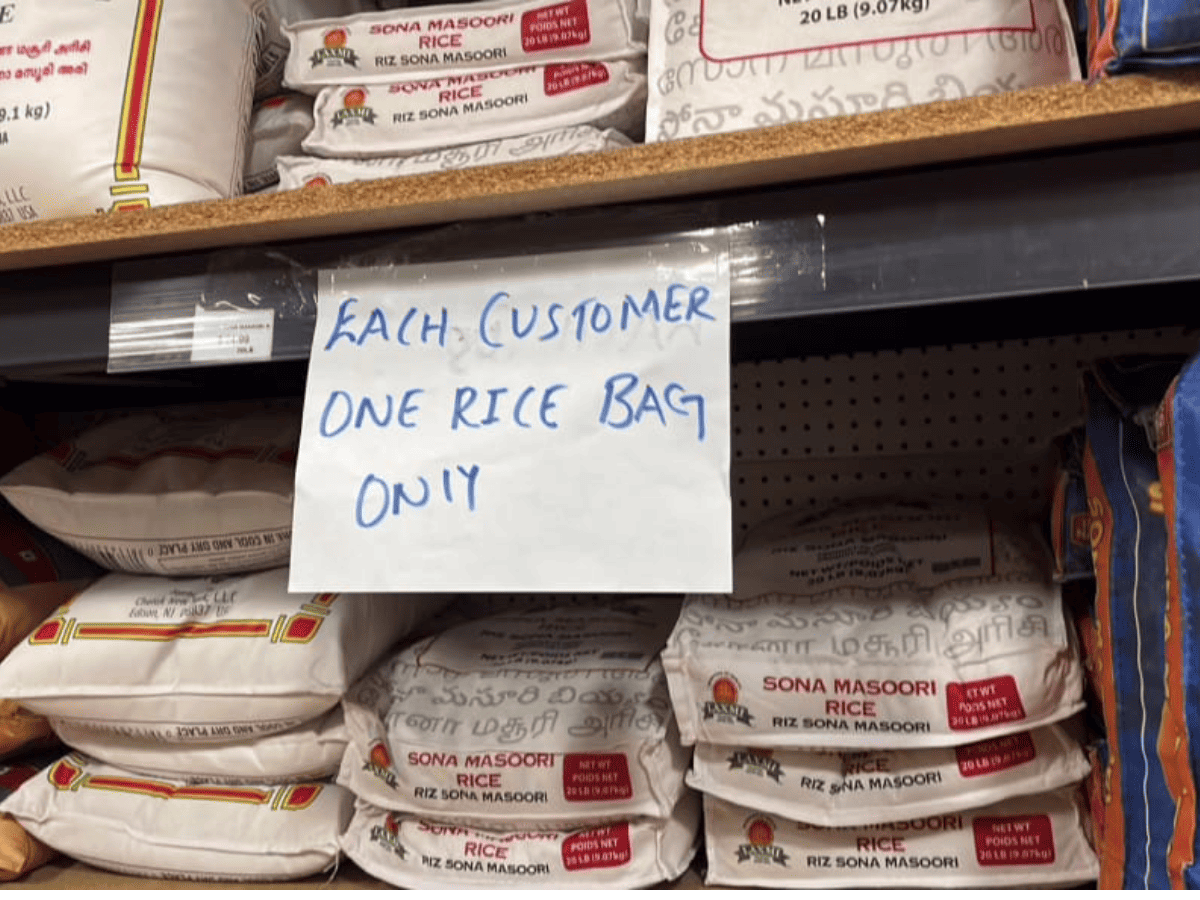
As the global community continues to grapple with the implications of India’s decision to halt its rice export, panic buying and soaring prices in the United States demonstrate the repercussions of this decision. Reports over the weekend have documented India-Americans standing in long lines in an effort to scoop up the limited supply of rice. The resulting price hikes have forced some US supermarkets to increase the cost of a 20-pound bag from $16 to near $50.
The Indian government’s determination to “calm domestic prices” has created a supply shock for the global market. Rice accounts for 40 percent of the world exports, and India’s largest rice export category, non-basmati rice, has been particularly hard hit. This type of rice is the most commonly used in traditional American recipes, as well as in Asian and Mexican cuisine.
Videos from social media saw people in Texas, New Jersey, and Alabama clamoring for rice.
On average, rice prices in the US have risen by 11 percent, with some stores hiking the cost of a 20-pound bag to almost $50. Money-making schemes have risen out of the panic, capitalizing on the desperate need for the grain.
The south Asian nation is sending shock waves beyond the US border as other countries scramble to fill the supply deficit. Vietnam and Thailand, two of the world’s largest rice exporters after India, are looking to ramp up production, but their 5 percent broken rice prices are hovering at a 10-year high at $515-$525 per metric ton.
For African countries, the Indian government’s decision has been particularly distressing, as many of these countries rely on Indian exports to feed their citizens. Benjamin Rao, President of the Rice Exporters Association, has pointed to the impact India’s policy will have on the global rice market, saying it will rival the disruption caused by Russia’s suspension of grain imports from Ukraine.
The global food crisis continues to worsen, as India’s decision to halt its rice exports adds further instability to the market. With demand heavily outweighing the current supply, prices will likely continue to rise, exposing more people to extreme poverty. Unless the Indian government reconsiders its policy, the consequences could be devastating.

