

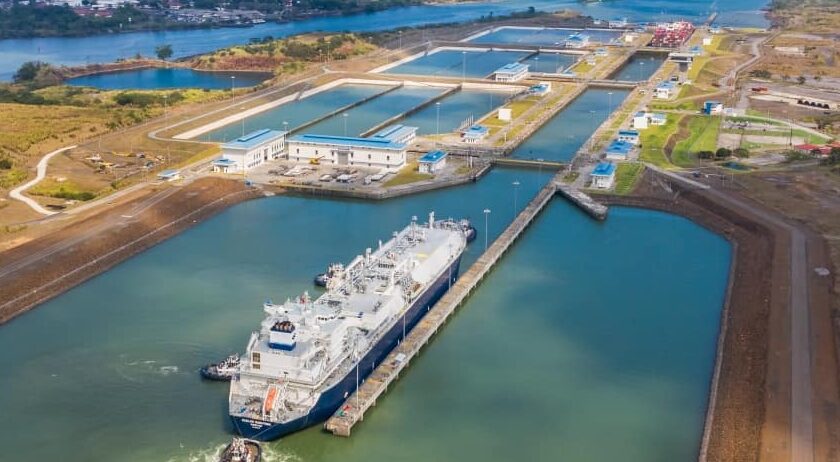
The Panama Canal is facing unprecedented queues due to a serious drought leaving hundreds of ships stranded on both sides. This has left the Panama Canal Authority with no choice but to put a cap on the number of daily transits through the canal resulting in some ships being backed up for over 20 days.
This situation has caused a massive strain on global shipping and trade, as well as a loss of about $ 200 million in expected revenue for Panama. Additional costs, like extra fees, are added to the expenses of shipping goods and commodities, leading to an increased financial burden for transporters and consumers.
The drought follows what has been recorded as the driest spell in the history of the Panama Canal. Without enough rain, the water levels get too low for ships to pass through, so the Panama Canal Authority had to act. To relieve the situation, they issued a restriction on the amount of vessels permitted to cross, extending until September 2.
In order to prepare for potential further droughts, the US Army Corps of Engineers, who originally built the canal, have allocated $ 2 billion over the next decade to divert four rivers into the Panama Canal and restore its water supply.
The situation could have wide-reaching effects on global trade. Container ships, the most significant users of the Panama Canal, are usually allowed preferential treatment, as they typically have fixed schedules and book crossings up to a year in advance. However, some have become stuck in the backlog. This should not overly affect consumer goods prices since these ships usually move between Asia to the US. However, it could cause a spike for US commodities heading to Asia and the South American Pacific Coast.
Smaller ships operating on short notice and moving bulky items like coal and iron ore also face huge queues as they don’t receive the same privilege in lane allocation. This could add pressure to the consumer, as costs and delays add to the expense of shipping goods, leading to increased prices and fewer choices for purchases.
The Panama Canal is a lifeline for global trade, so the effects of this unprecedented queueing time can be serious. Let’s hope that the rains come soon and the situation can be resolved.

